What Are the Best Times of Day to Fish? Understanding Major and Minor Periods
April 11, 2025
Uncategorized
When it comes to fishing, timing can mean the difference between a full cooler and a frustrating day on the water. While weather, location, and technique all matter, there’s one factor many anglers overlook: solunar periods—the best times of day when fish are naturally more active.
In this article, we’ll break down how to identify the best fishing times, explain what major and minor periods are, and show you how to take full advantage of them.
What Are Solunar Periods?
Solunar periods are specific windows of time each day when fish and wildlife are most likely to feed and move. These periods are based on the position of the moon relative to the Earth, a concept popularized by the Solunar Theory.
There are two types of solunar periods every day:
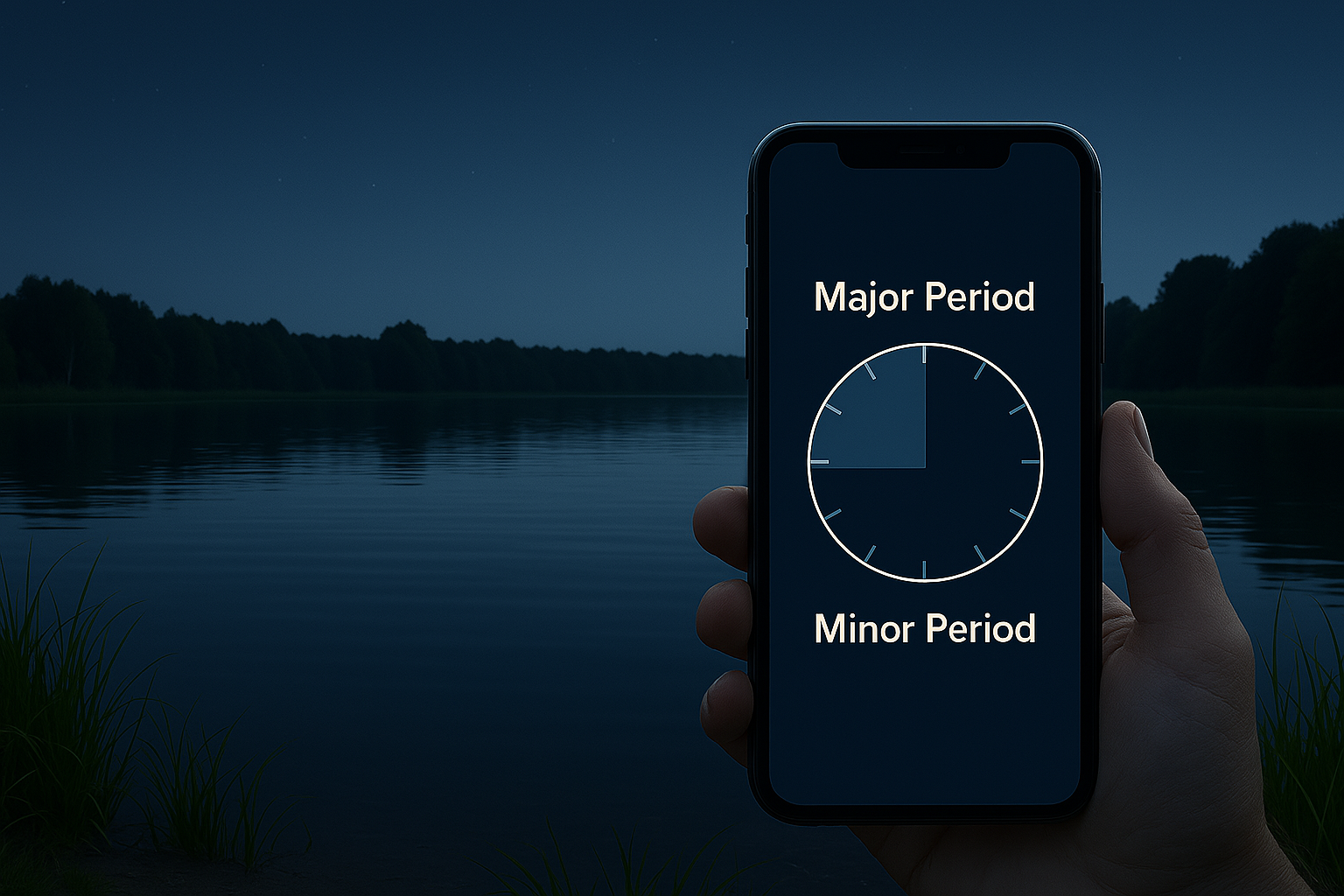
Major Periods: The most active times, lasting about 1.5 to 2 hours
Minor Periods: Shorter activity bursts, around 45 minutes to 1 hour
Major Periods: Prime Time for Fishing
Major periods occur when the moon is directly overhead (transit) or directly underfoot. During these times, fish are more likely to feed aggressively—especially if other factors like water temperature and pressure are favorable.
What to Expect:
Increased feeding activity
Better chances of catching larger fish
Great for long sessions (early morning or late afternoon)
Tip: Begin fishing 30 minutes before the major period starts to catch early activity.
Minor Periods: Still Worth Your Time
Minor periods happen during moonrise and moonset. While shorter, they still represent times of increased fish activity—especially if aligned with dawn, dusk, or weather shifts.
What to Expect:
Quick feeding bursts
Ideal for short fishing trips
Best during stable weather
Tip: Use minor periods when you don’t have time for a full session.
Can You Combine Solunar Times With Sunrise/Sunset?
Absolutely. One of the most productive windows is when a major or minor period overlaps with:
Sunrise
Sunset
A warm front
A stable barometric pressure
When these forces align, fish are far more likely to bite.
Check Your Daily Fishing Times Instantly
With the Solunar Time Forecast app, you don’t need to calculate anything. Get instant access to:
Today’s major and minor periods
Moon phase, sunrise, and sunset
Hourly weather forecast
Your exact location’s best times
Final Thoughts
If you’re asking, “When is the best time to fish today?” — solunar periods hold the answer. Start planning your outings around these natural feeding cycles, and you’ll start noticing the difference.
Check today’s best fishing times in the Solunar Time Forecast app—and catch more with less guesswork.